

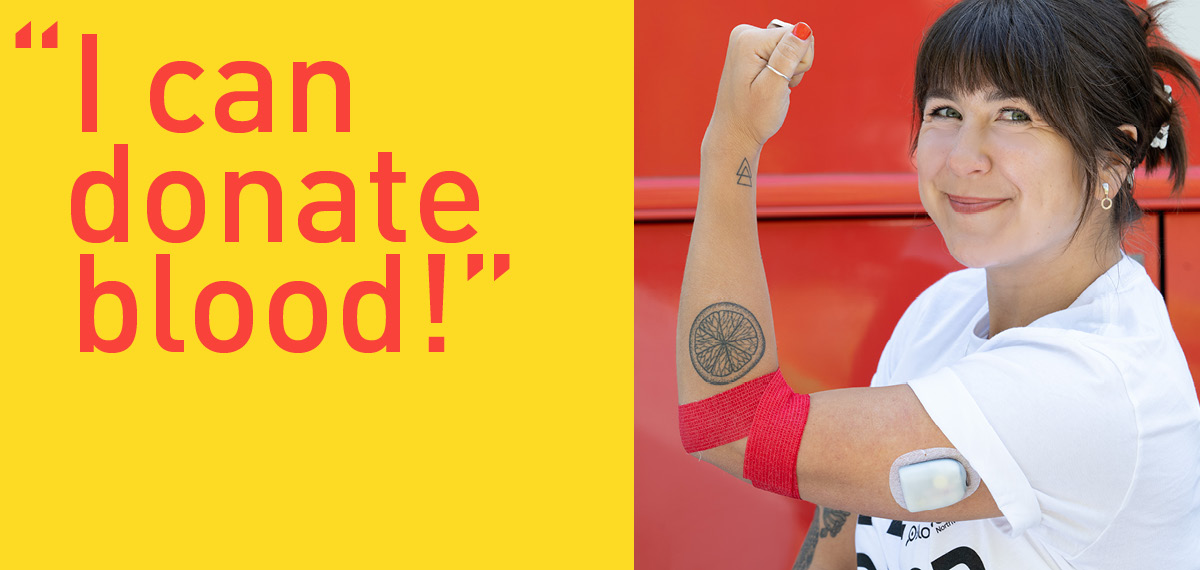
One of the most frequent questions we hear from prospective donors is, “can I donate blood if I have diabetes?”
The answer is yes: people with Type 1 or Type 2 diabetes or prediabetes can donate blood if their diabetes is under control, with or without medication, and they meet all other blood donation eligibility requirements.
What does it mean for diabetes to be “under control”? This is up to your own understanding of your own health and target ranges, which will vary from person to person. You shouldn’t be in the middle of wide swings in your glycemic levels, which impact both your hydration and overall physical health.
Bloodworks tests for iron level and blood pressure at the time of donation, but there is no requirement to test donors for blood sugar. If your blood sugar is not in range at the time of your donation or you are not feeling well due to your diabetes, you should not donate.
Donating blood has no impact on your blood sugar – we’re taking out volume but not changing the concentration of your blood.
The Association of Diabetes Care and Education Specialists still recommends monitoring blood sugar levels before and after each donation.
Although blood sugar is not impacted significantly by the donationitself, hemoglobin A1c (HbA1c) may drop following whole blood donation. Therefore, diabetic blood donors should discuss their donations with their doctor.
Hydration is important for all donors before and after donation. The most common donor reactions are related to the need for more fluid after a donation. Fatigue, headaches, and nausea can often be relieved by drinking more liquids in the days and weeks following your appointment.
Plus, we offer a variety of canteen snacks and beverages to fit donors’ dietary needs, including salty treats and sugar-free drinks.
Got additional questions? Talk to your doctor or give our clinical specialists a call at (425) 656-3077 (option 1).


Tell Us What You Think!