
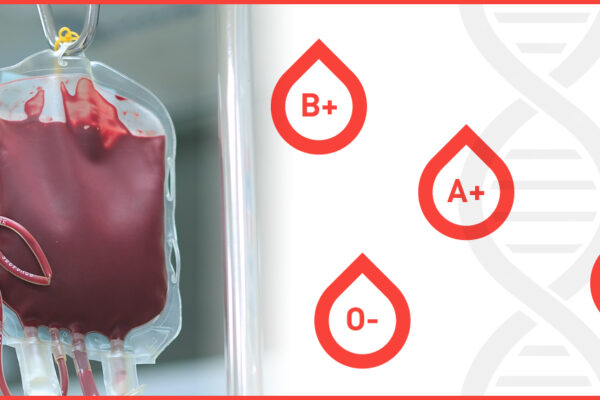
If you know your blood type, you know your ABO group and Rh type. But do you know your Kell, Duffy, or Kidd?
The International Society of Blood Transfusion has identified almost 50 blood group systems with hundreds of variants.
Most of these systems were discovered in the 20th century, while others have been determined far more recently.
For example, in 2024, British and Israeli researchers solved a mystery more than 50 years in the making when they identified the MAL blood group, first observed in a patient in 1972.
Two years prior, scientists at the University of Bristol uncovered the Er blood group — 40 years after its initial documentation.
ABO and Rh are the two blood groups where a mismatched transfusion is most likely to cause severe, immediate reactions, which is why they’re the ones that we tend to focus on most.
Many people receiving a blood transfusion — about 95% — may not need to be matched beyond ABO and Rh.
However, for patients like liver transplant recipient Hayley Resk, specially matched blood might become a necessity.
“My blood’s also hard to match,” said Hayley. “I’m A positive but… there’s some other markers that they have to match, too.”
To find the 5% who might need matching for other blood groups, an antibody screen is also done before transfusion.
Most of these antibodies are formed following exposure to blood from someone else —most commonly through pregnancy or prior transfusions. People who have received multiple transfusions or had multiple pregnancies are more likely to form multiple antibodies, as they have been exposed to more sources.
Some of these antibodies can cause destruction of transfused blood, called a hemolytic transfusion reaction. To avoid such reactions, the transfusion service would select blood for transfusion that is negative for the offending antigen.
Rare antigens are relatively easy to match for because most units in the blood supply will be negative. High-frequency antigens are harder to match for because most units will have them.
Like ABO and Rh, we inherit these other blood types from our parents and their ancestors before them. Most also exist in co-dominant pairs. Some are even inherited in patterns linked to other antigens.
In addition, new mutations can occur, adding complexity.
When a match is needed, the most likely type of person to match the patient’s need is someone who shares the same hereditary patterns, whether the patient is from a small, isolated population where a particular variant is found or comes from a large region where a certain pattern of antigens is more prevalent.
For example, nearly all Caucasian people have the U antigen but only 99% of Black people have it. 1% may not seem important, but on the scale of the entire local population, it becomes significant.
In our community, we have patients from all sorts of inherited backgrounds, which is why we also need blood donors from all sorts of backgrounds to support patients who need blood with all possible antigen combinations.
Blood is complicated, but saving lives through blood donation is quick, easy, and painless. And when we say “all types are always needed,” we truly mean all types.

Tell Us What You Think!