

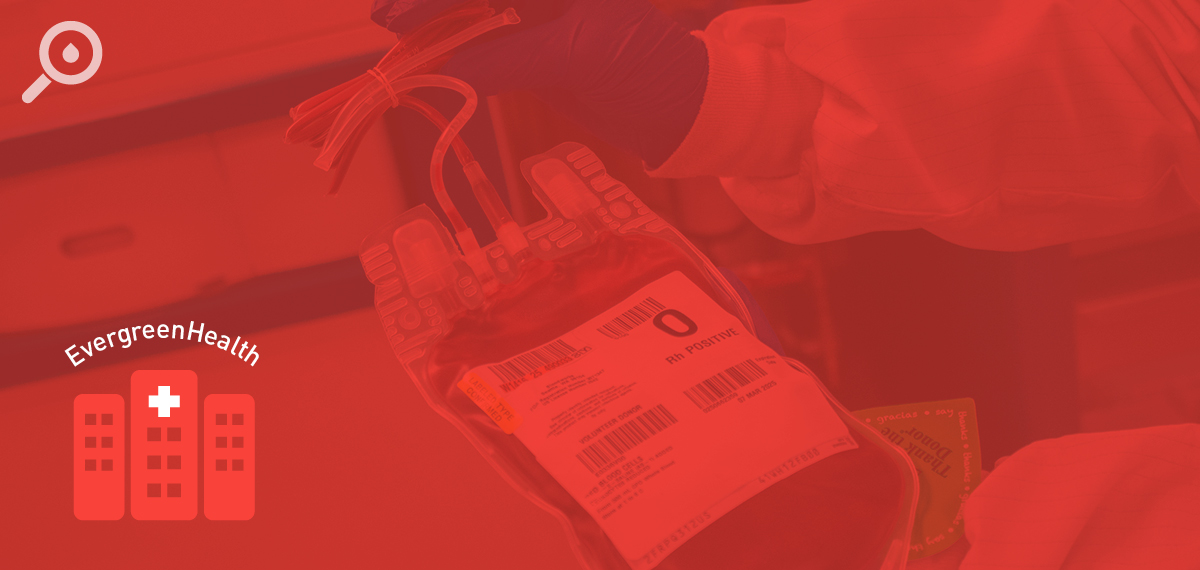
Bloodworks supports more than 90% of hospitals in the Pacific Northwest with lifesaving blood. At most of these institutions, the blood bank is managed by hospital staff.
However, three hospitals in the Seattle area have a unique model: they have given Bloodworks space to operate an on-site Transfusion Service Lab (TSL).
Bloodworks’ Integrated Transfusion Services model is comprised of four laboratories to support hospital and clinic operations: three within local hospitals and one at our headquarters in Seattle.
“These labs are physically located close to the hospitals that they serve,” said Dr. Yujung Jung, Assistant Medical Director.
“Each lab serves more than one hospital from its location, and in total the transfusion service serves 11 hospitals and five Fred Hutchinson Cancer Center (FHCC) outpatient infusion clinics.”
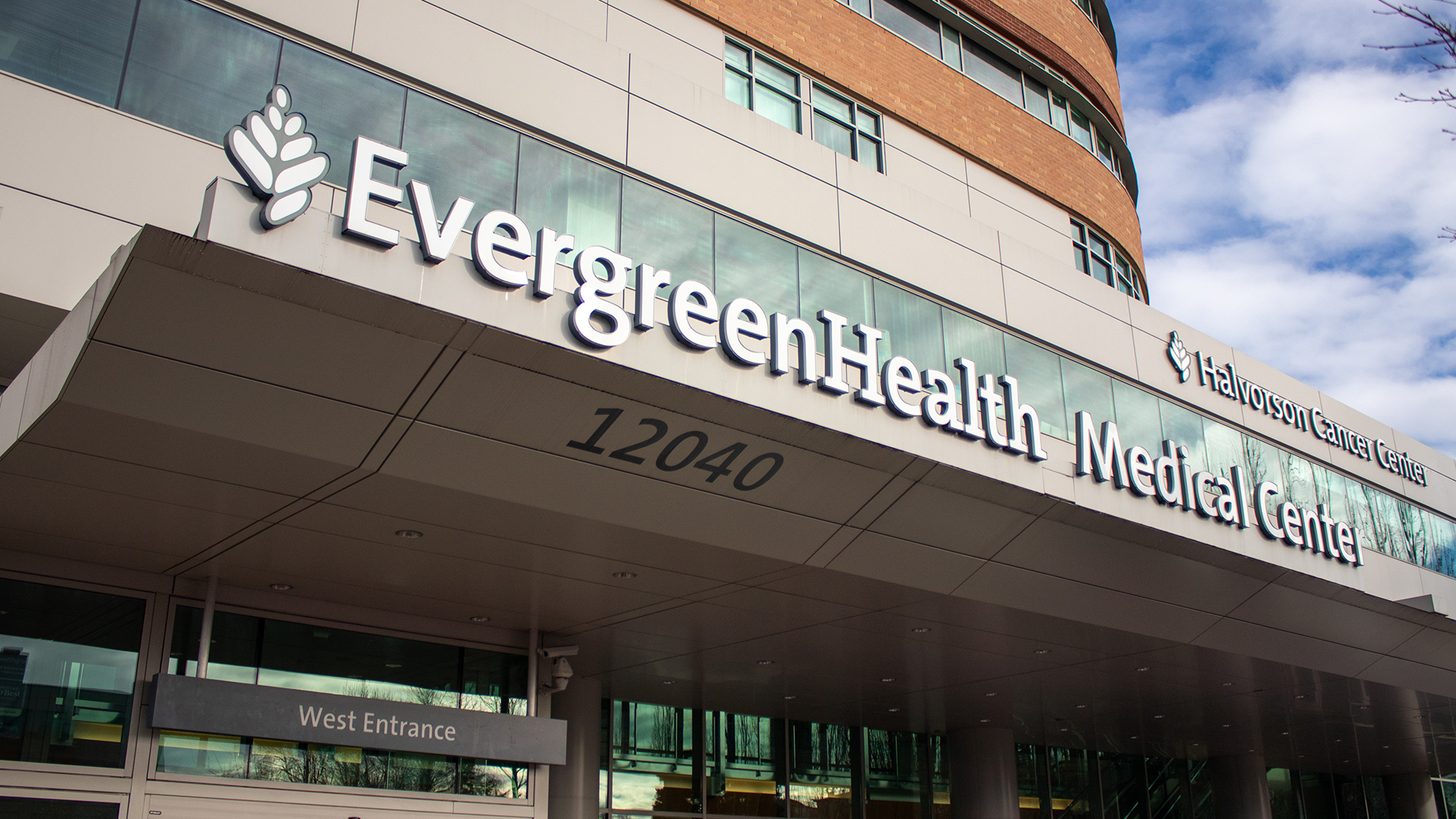
Bloodworks’ EvergreenHealth TSL performs patient testing and supplies blood for EvergreenHealth Kirkland, EvergreenHealth Monroe, and Fred Hutch at EvergreenHealth.
“We test patients’ specimens for blood type and antibodies, primarily,” said Bill Brimeyer, lab supervisor. “And then provide them with transfusable blood components if they need a blood transfusion: red blood cells, plasma, pooled cryoprecipitate, and platelets.”
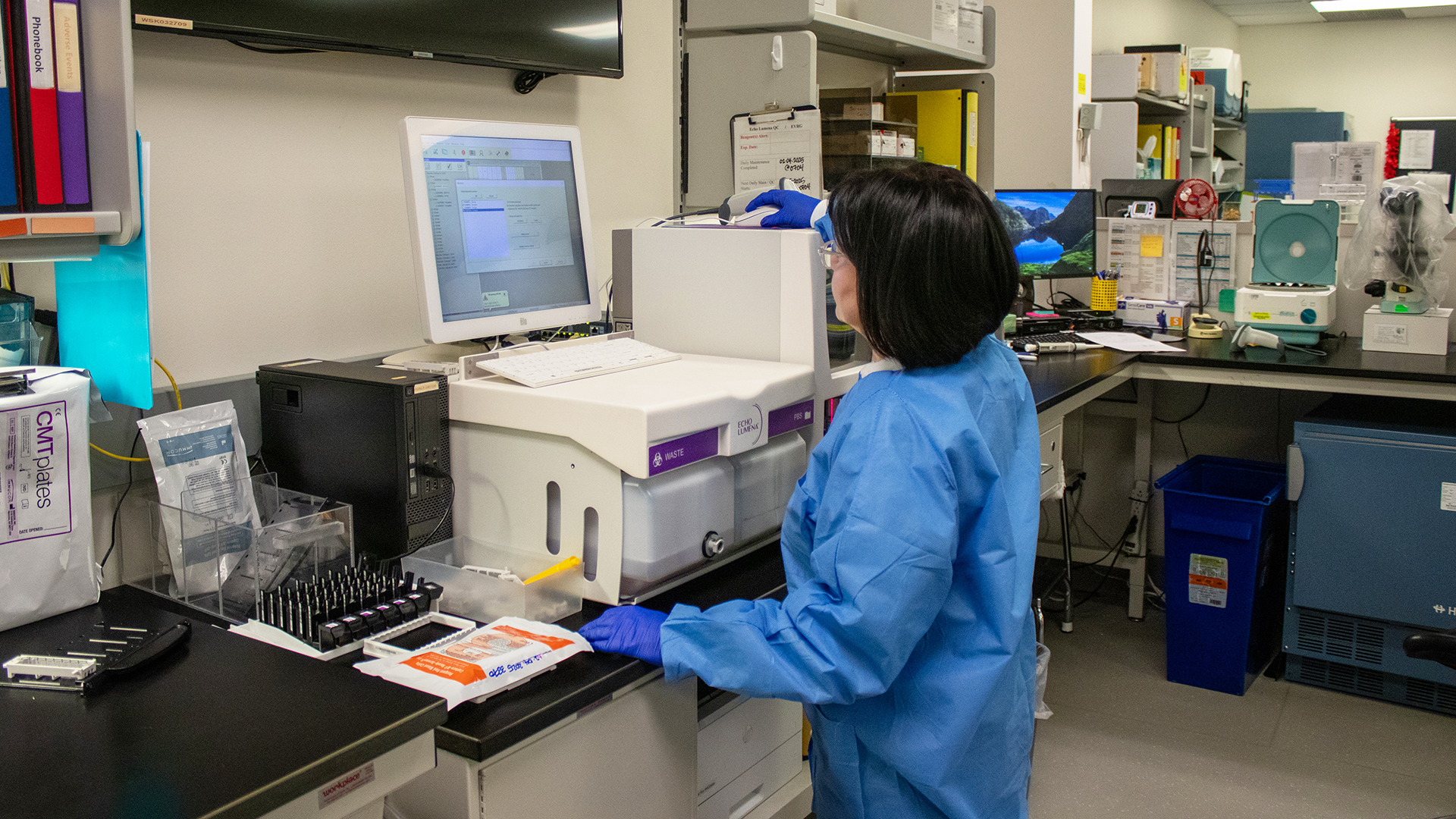
The lab can perform further testing, such as antibody identifications, and transfer more complicated samples to Bloodworks’ Immunohematology Reference Lab for advanced consultation if needed.
All results are added to a transfusion service database that interfaces with the hospital patient database.
Regulations require that we store patient samples on-site for a certain length of time in case additional testing or follow-up is needed, such as in the event of a transfusion reaction.
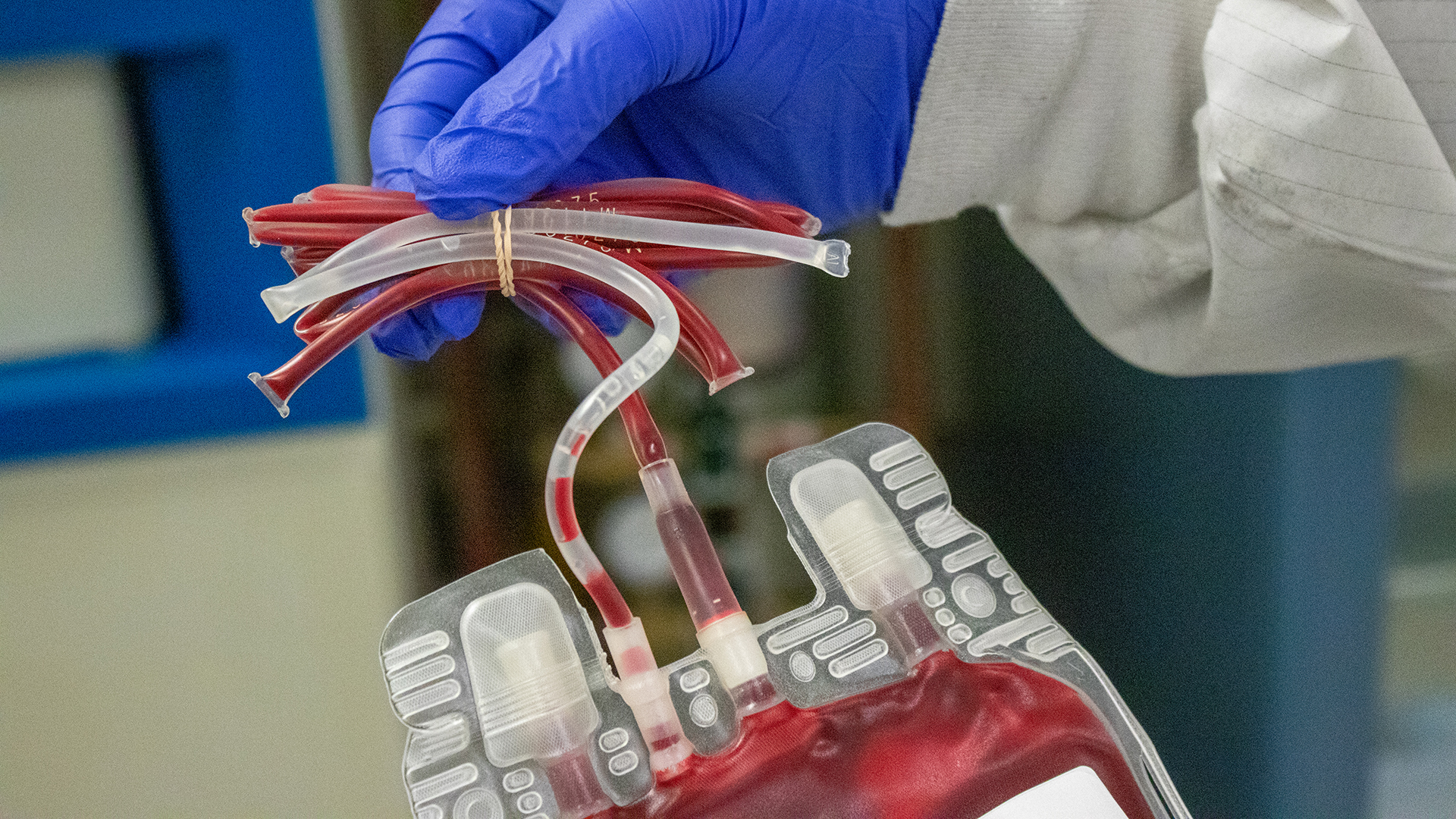
All testing on donated blood after the initial processing is done using segments in the tubing attached to the blood bag.
“As the unit is collected, the blood collection specialist is careful to create segments using a tube sealer,” said Dr. Theresa Nester, Bloodworks’ Co-Chief Medical Officer and Medical Director of Integrated Transfusion Service Labs. “This is what our lab techs will use to do all of the testing on a unit of red calls.”
By doing this, the unit itself stays sterile. After the unit goes to a patient, we also hold on to these segments in case the patient has a transfusion reaction, and we need to do additional red cell testing.
One advantage of being onsite at EvergreenHealth is the speed at which Bloodworks TSL staff can provide care to patients. For example, in the event of a massive transfusion protocol, Bloodworks is on-site to work with the provider team.
“It is nice to be in a hospital because we have much more interaction with the nurses,” said Dr. Nester. “The transfusion service staff can see the panic on the nurse’s face if someone’s unstable, but they also get a better sense of how a patient is doing — and when they have helped to save a patient’s life.”
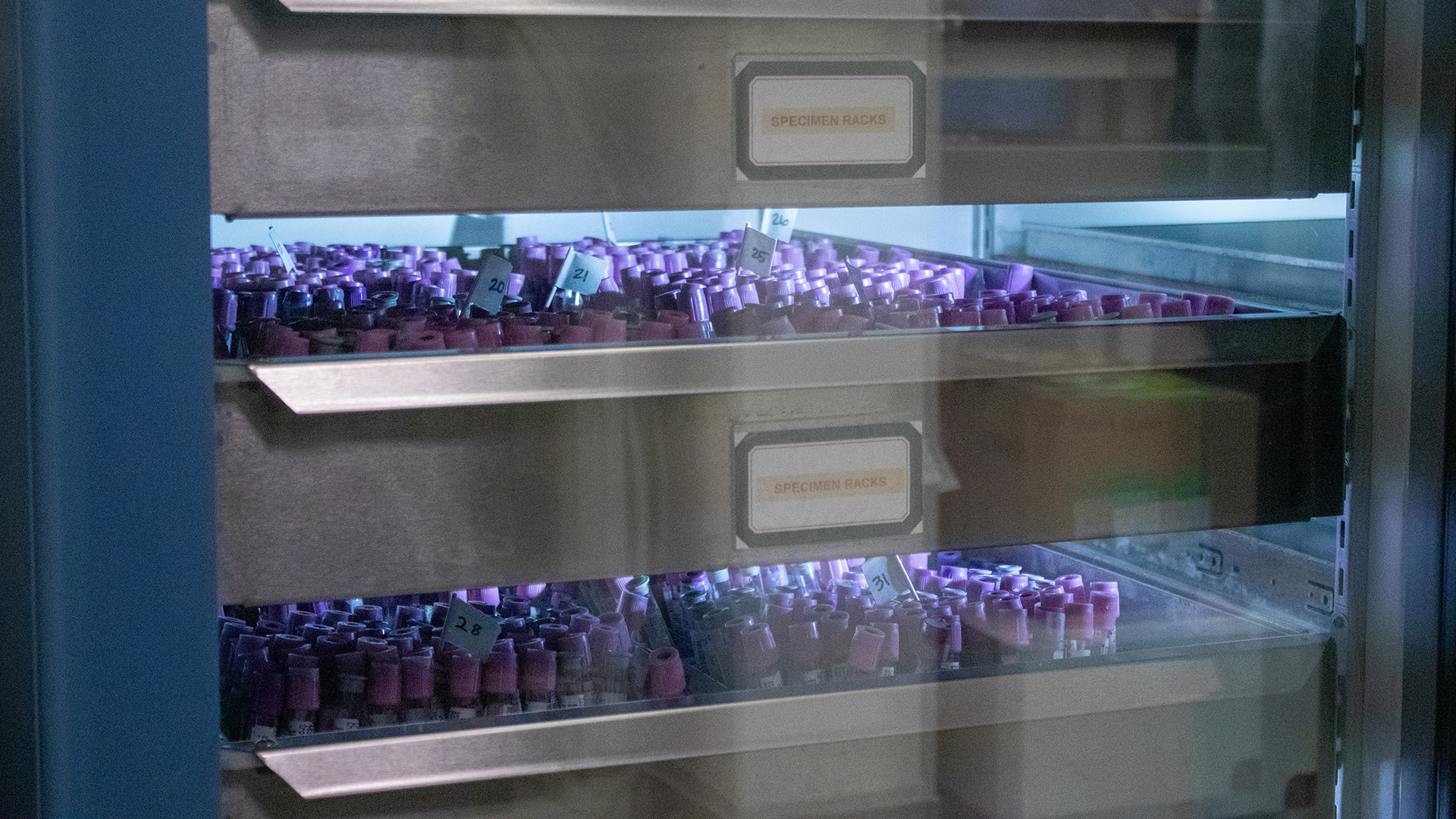
During my visit, a nurse from Fred Hutch came to the window to drop off a sample for testing.
“And so, hospital staff will bring the samples down for us to do the crossmatch, for example. And then they also come to the window to pick up blood during a bleeding situation or just a routine transfusion,” said Dr. Nester.
A crossmatch is additional, specialized blood group testing. All donated blood is tested for communicable diseases and ABO and Rh type. However, patients who receive frequent blood transfusions may develop antibodies to other blood groups – ABO and Rh are just two of many blood group systems.
“A crossmatch of the red cell with the patient’s current plasma sample is done to ensure that the unit selected is compatible,” explained Dr. Nester. “This is performed every three days for a patient requiring red cell transfusions. It is the final check after performing the red cell antibody screen and selecting what we believe to be a compatible unit, given prior testing on the unit.”
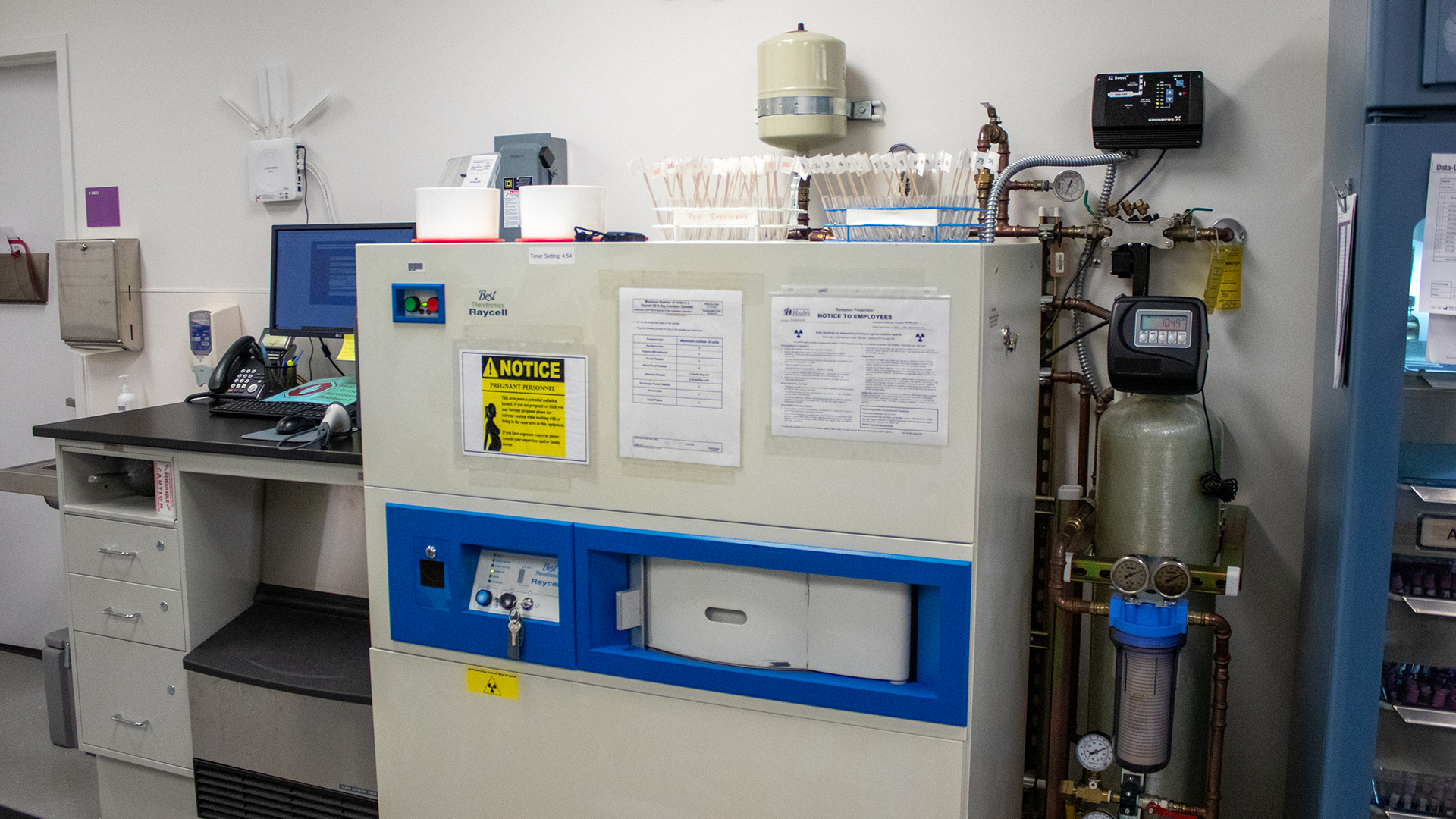
Bloodworks’ EvergreenHealth lab has an irradiator on-site, a machine that treats blood with radiation. Irradiators need space and a water source, so it’s particularly special to have one at EvergreenHealth.
“We irradiate blood to destroy DNA so it can’t cause Transfusion Associated graft vs. host disease,” Bill said. “It’s primarily for bone marrow transplant patients so that they don’t become gravely ill from the white cells in the blood.”
Transfusion-Associated Graft vs Host disease (TA-GVHD) is a rare but life-threatening complication. Irradiation prevents the white cells (specifically, T lymphocytes) from dividing and attacking the recipient.
All platelets are either irradiated or treated with pathogen reduction technology.
Red cells are irradiated on a case-by-case basis, since irradiation significantly shortens their shelf life, and most patients don’t need irradiated red cells; TA-GVHD is a particular risk for patients who are immunocompromised, such as after bone marrow transplant.
For those who do, it’s best to irradiate the blood at the time it’s issued to a patient.
“In babies, ideally we would give blood that’s been irradiated just before we issue it to the baby,” explained Dr. Nester. “Once you irradiate a unit, the potassium level rises, so you could hurt a baby with high potassium.”
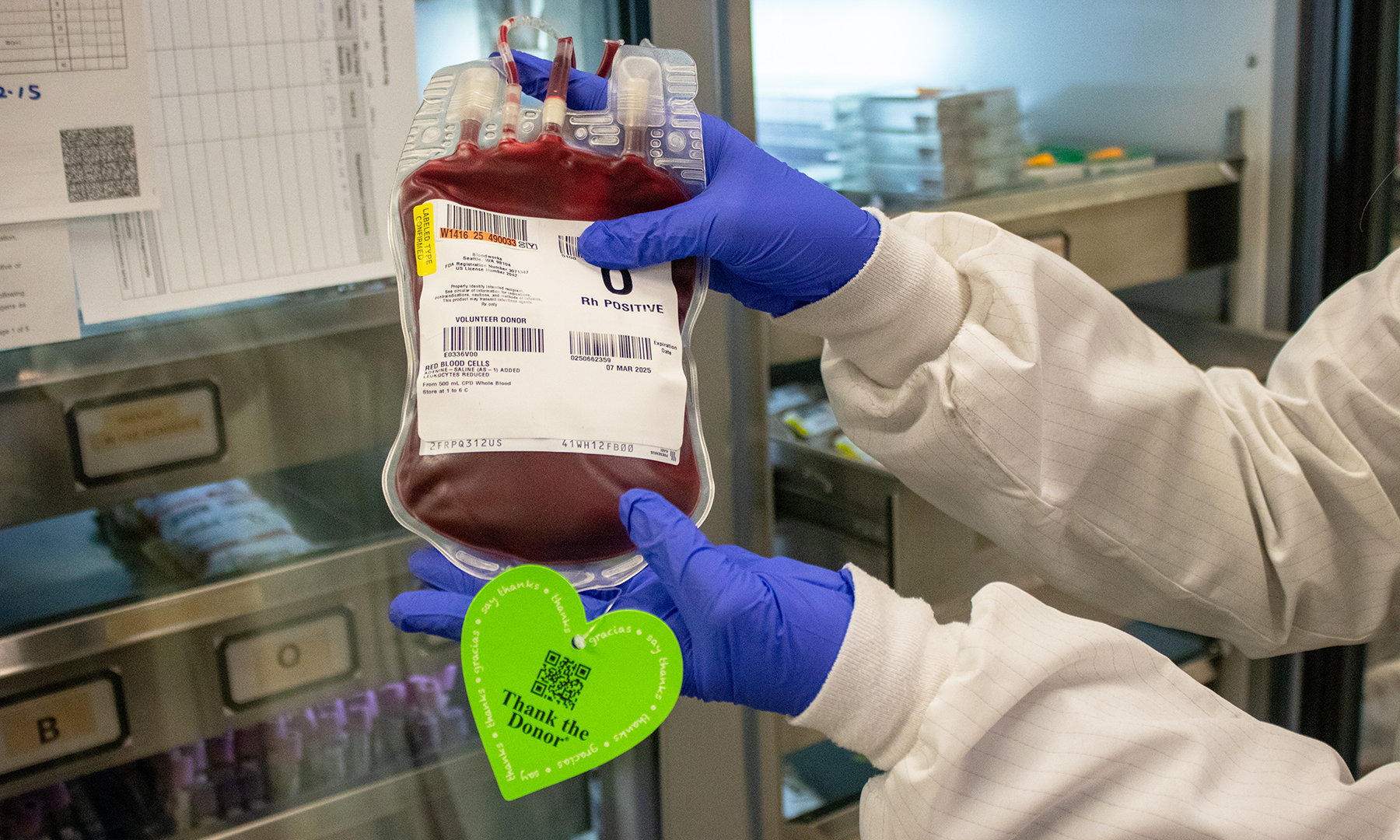
EvergreenHealth Kirkland is a level three trauma center, meaning the hospital provides 24-hour immediate emergency level coverage, with surgery teams available on-call around the clock. As such, Bloodworks is ready to provide service and prepared for massive transfusion protocol 24/7.
Postpartum hemorrhage is the biggest use of blood at EvergreenHealth: the hospital delivers over 5,000 babies each year.
“Most people who deliver a baby never need blood,” explained Dr. Nester. “For the ones who do, the team is so good at taking other measures to stop the bleeding that at most it’s one or two units of red cells, but occasionally it’s more.”
“There is a neonatal unit onsite, so TSL staff must stay proficient in selection of the correct blood products for babies,” added Dr. Jung.
While the need for blood at small, rural hospitals is typically low, Evergreen Monroe occasionally receives a patient involved in a car or snow sports accident due to its proximity to Highway 2 and the Stevens Pass recreation area.
For these cases, “a ‘mini’ massive transfusion pack is available to help stabilize the patient prior to transfer to a larger hospital,” explains Dr. Jung.
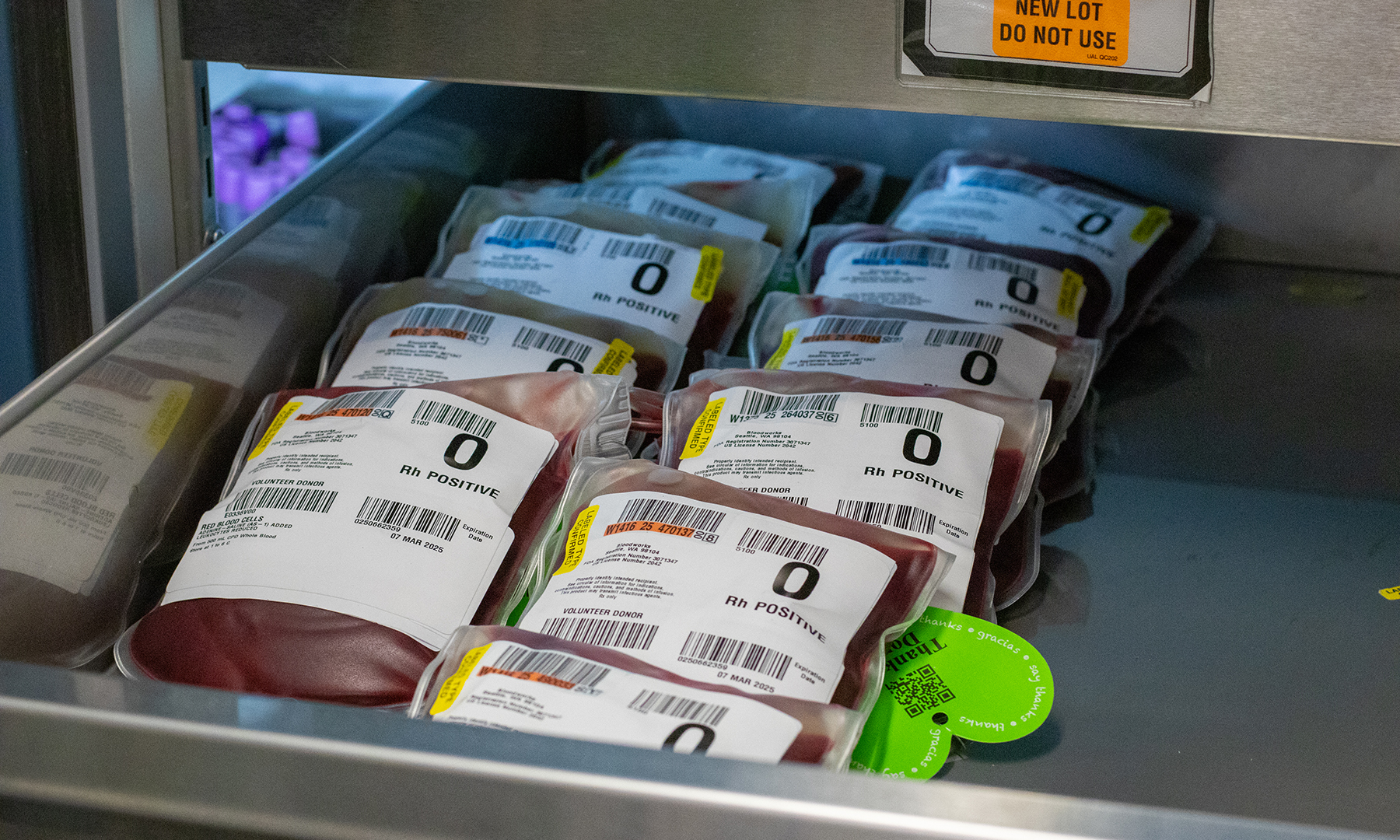
However, one third of all blood donations go to patients fighting cancer.
As I walk past the beautiful Fred Hutch facility on my way out of EvergreenHealth Kirkland, I glance through the window to watch a provider place a wrist band on a young man in his 20s, his mother or grandmother at his side.
I wondered: was that nurse from earlier placing an order for him? In that moment, I am reminded how much the work we do matters.
Tell Us What You Think!